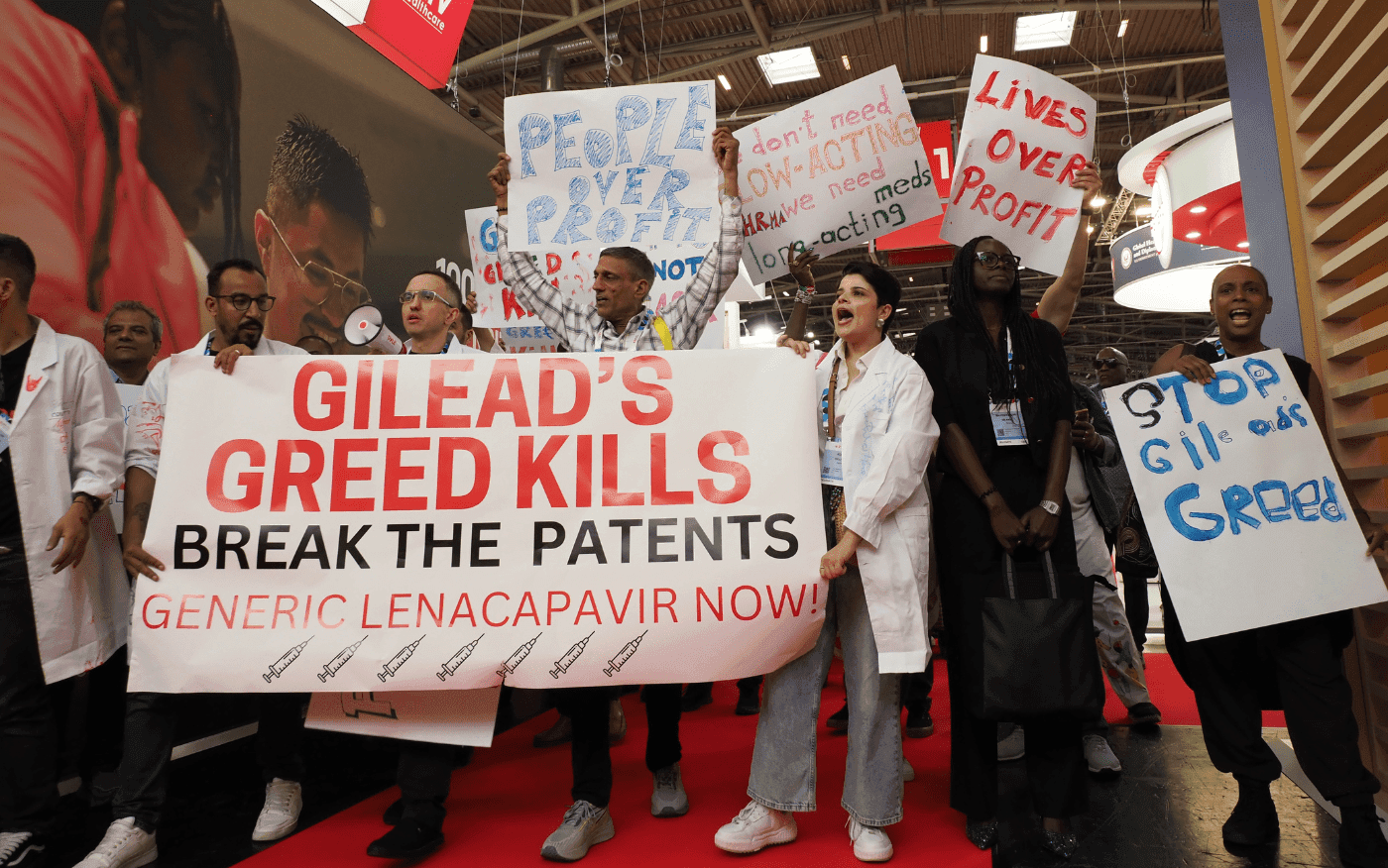

Source : Make Medicines Affordable (MMA)
MMA warns that the lack of oral lenacapavir could undermine the rollout of generic injectable PrEP, putting another major HIV prevention breakthrough at risk.
On 2 November 2026, the global health community welcomed the US FDA’s tentative approval of the first generic injectable lenacapavir (LEN), manufactured by Dr. Reddy’s Laboratories. Developed and approved in record time, with a promised price of just US$40 per person per year, this milestone represents a major achievement in efforts to make highly effective HIV prevention affordable.
But a largely overlooked supply problem threatens to undermine this achievement: the availability of oral lenacapavir tablets needed to initiate the currently approved injectable regimen.
Without these tablets, the promise of affordable injectable lenacapavir could remain out of reach for millions of people who could benefit from it.
Four tablets could determine the success of generic lenacapavir
Lenacapavir is one of the most promising HIV prevention technologies developed to date. Administered through injections every six months, it demonstrated 96% to 100% efficacy in preventing HIV infections in major clinical trials.
However, the currently approved initiation regimen requires both injectable and oral formulations. People starting lenacapavir receive two oral tablets alongside their first injections on day one, followed by another two tablets on day two. This loading regimen enables lenacapavir to rapidly reach protective drug levels.
Four tablets are needed to initiate one person on injectable lenacapavir.
Yet these four tablets could become one of the biggest obstacles to its widespread introduction.
Unlike the injectable formulation, which generates recurring demand every six months, oral lenacapavir is primarily needed at initiation. However, generic manufacturers seem reluctant to invest in developing, manufacturing and obtaining regulatory approval for a product with a relatively limited and less commercially attractive market.
The result is a potentially dangerous imbalance: manufacturers are prioritising the injectable formulation while the tablets needed to initiate its use risk being left behind.
Generic manufacturers are moving ahead with injections, but what about the tablets?
During the World Community Advisory Board meeting held in November 2026, members of the Make Medicines Affordable (MMA) campaign raised this concern directly with Gilead Sciences and several generic manufacturers licensed to produce lenacapavir.
The discussions revealed worrying gaps in plans to ensure that oral tablets will be available alongside generic injections.
One generic manufacturer indicated that it did not intend to produce the tablets, assuming that other manufacturers would supply them. Another confirmed plans to develop oral lenacapavir but indicated that its regulatory submission was still several months away, with approval and commercial availability requiring additional time.
Some manufacturers appear to be relying on Gilead to supply oral tablets during the transition to generic production.
However, discussions with Gilead provided little reassurance. The company indicated that it had already granted voluntary licences and that responsibility for developing and supplying generic formulations now rested with the licensees.
Issuing voluntary licences is important. But a licence is not an access strategy.
Gilead developed and commercialised a prevention regimen that depends on two formulations. As the originator company with an approved oral formulation, it has a responsibility to help ensure that the transition to generic supply does not leave a critical component of the regimen unavailable.
Yet there is currently no publicly articulated, coordinated plan guaranteeing adequate oral lenacapavir supplies alongside the first generic injectable products.
A serious risk for HIV prevention in 2027
The consequences could become apparent as early as 2027, when generic injectable lenacapavir is expected to become available in countries covered by Gilead’s voluntary licensing agreements.
Countries could receive affordable, quality-assured generic injections but lack the oral tablets required to initiate new users under the approved regimen.
Programmes might be able to continue providing injections to people already initiated through Gilead-supported supply arrangements, while being unable to enrol new people using generic products.
This would create an unacceptable situation: affordable injectable lenacapavir sitting in warehouses while people remain unable to start PrEP because four tablets are missing.
The consequences would extend beyond individual procurement programmes.
Countries preparing to introduce lenacapavir need predictable supply, regulatory certainty and confidence that they can initiate and maintain people on PrEP. Uncertainty about a critical component of the regimen could delay procurement decisions, national guidelines, training and programme implementation.
At a time when reductions in international HIV funding are already threatening prevention programmes, the global response cannot afford another avoidable delay.
We cannot afford another cabotegravir experience
The introduction of long-acting cabotegravir for PrEP offers a warning.
Despite regulatory approval and voluntary licensing, affordable generic access has taken years to materialise at scale in many countries. The gap between scientific innovation and widespread access has cost the HIV response precious time.
Lenacapavir risks following a similar trajectory, this time not only because of patents, prices or restrictive licensing agreements, but because of a foreseeable failure to coordinate the supply of two essential formulations.
The window of opportunity is also changing.
Merck is advancing alimatravir, an investigational once-monthly oral PrEP medicine, through Phase 3 clinical trials. If successful, it could offer another important HIV prevention choice in the coming years.
More prevention options are welcome and urgently needed. But prolonged delays in introducing lenacapavir could discourage countries from investing in new delivery programmes as they anticipate additional technologies. Manufacturers may also reconsider their investments if expected demand fails to materialise.
The global HIV response risks losing years during which new infections could have been prevented.
This is not simply a manufacturing inconvenience. It is a foreseeable market coordination failure. And it is preventable.
MMA calls for urgent action to secure oral lenacapavir
Make Medicines Affordable calls on Gilead, generic manufacturers, regulatory authorities and global health procurement partners to act immediately to prevent a gap between the availability of generic injectable lenacapavir and the tablets required for initiation.
MMA calls for:
- Gilead to guarantee transitional access to oral lenacapavir. As the originator manufacturer, Gilead must work with procurement agencies and generic manufacturers to ensure that sufficient, affordable oral tablets are available until quality-assured generic formulations can be supplied. Granting licences does not absolve the company of responsibility for ensuring effective access.
- Generic manufacturers to disclose their plans for oral lenacapavir. Licensed manufacturers should provide clear information on which companies intend to develop and register the tablets, expected regulatory submission dates, manufacturing capacity and anticipated availability.
- Unitaid, CHAI, the Global Fund and other procurement partners to coordinate demand and supply. Global health agencies should urgently assess the quantities of oral lenacapavir required for generic PrEP programmes and explore pooled procurement or arrangements under which a limited number of manufacturers could supply tablets for use alongside injectable products from multiple suppliers, subject to regulatory requirements.
- Regulatory authorities to facilitate timely approval of oral formulations. The US FDA, WHO and relevant national regulatory authorities should work with manufacturers to identify scientifically justified regulatory approaches for low-volume oral production, without compromising quality, safety or efficacy.
- Governments and procurement agencies to require complete initiation regimens. Plans for introducing generic lenacapavir must account for both injectable and oral formulations, with transparent supply commitments and timelines. Procurement strategies should not assume that injectable approval alone guarantees access.
These actions must begin now, before the anticipated scale-up of generic injectable lenacapavir in 2027.
Access must be measured by people reached, not approvals announced
Enormous scientific, political and financial efforts have been invested from public funding to make lenacapavir affordable and create demand for it.
The first generic injectable approval is an important milestone. But celebrating approvals and low prices while overlooking a critical supply barrier risks repeating the failures that have delayed access to other HIV prevention technologies.
For MMA, this concern adds to the existing barriers created by Gilead’s restrictive voluntary licensing arrangements, which exclude many middle-income countries from affordable generic competition.
Whether countries are included in the licence or excluded from it, the principle remains the same: access must mean that people can actually obtain and use a complete, affordable and quality-assured prevention regimen.
The success of lenacapavir should not be measured by the number of licences signed, regulatory approvals announced or prices negotiated. It must be measured by the number of people who can actually start and continue using it.
No tablets, no initiation. No initiation, no access.
Without urgent action, another scientific breakthrough risks becoming another missed opportunity to prevent HIV.