Rabat, Tunis, Kyiv, Madrid, 17/11/2026
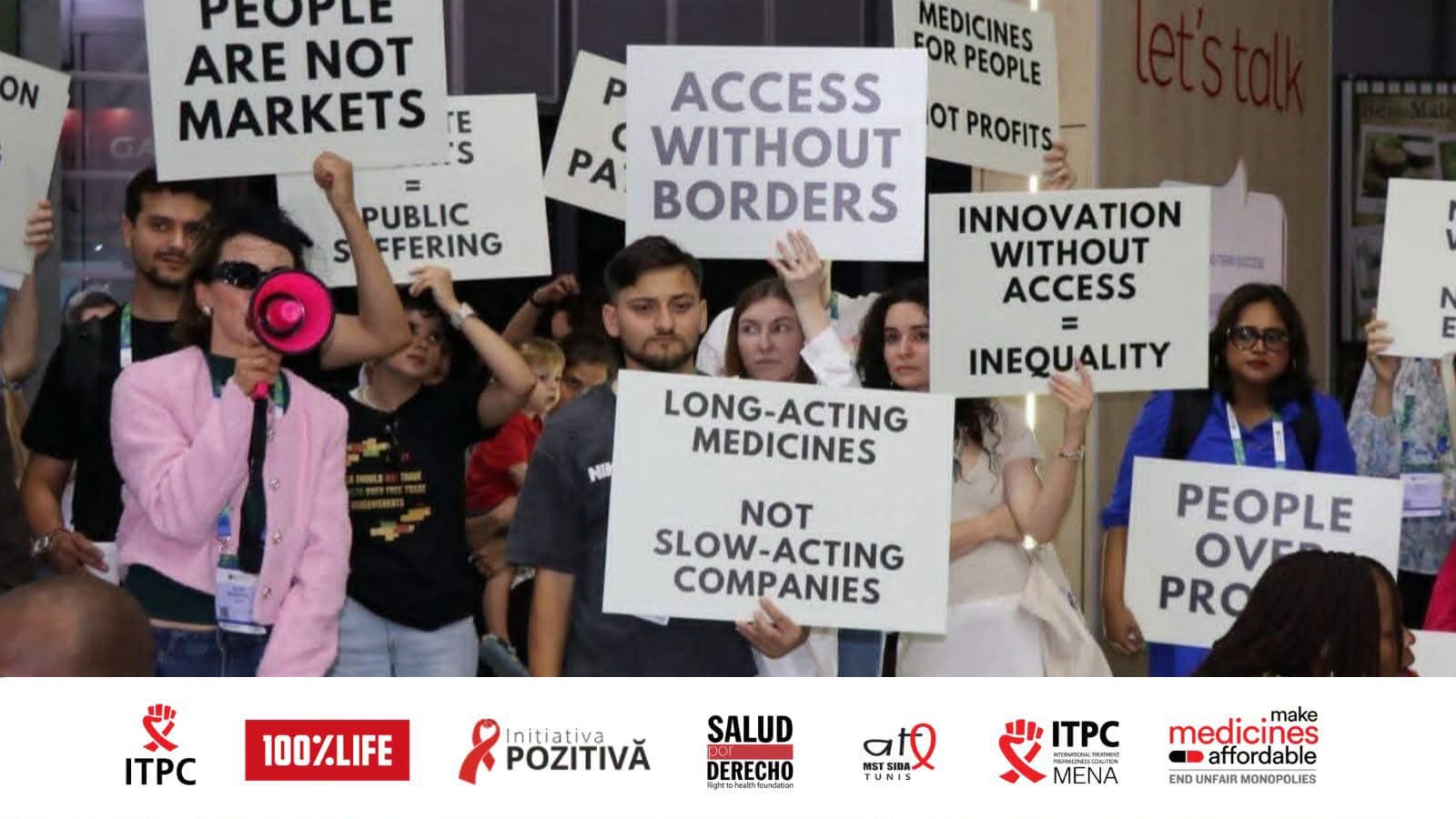
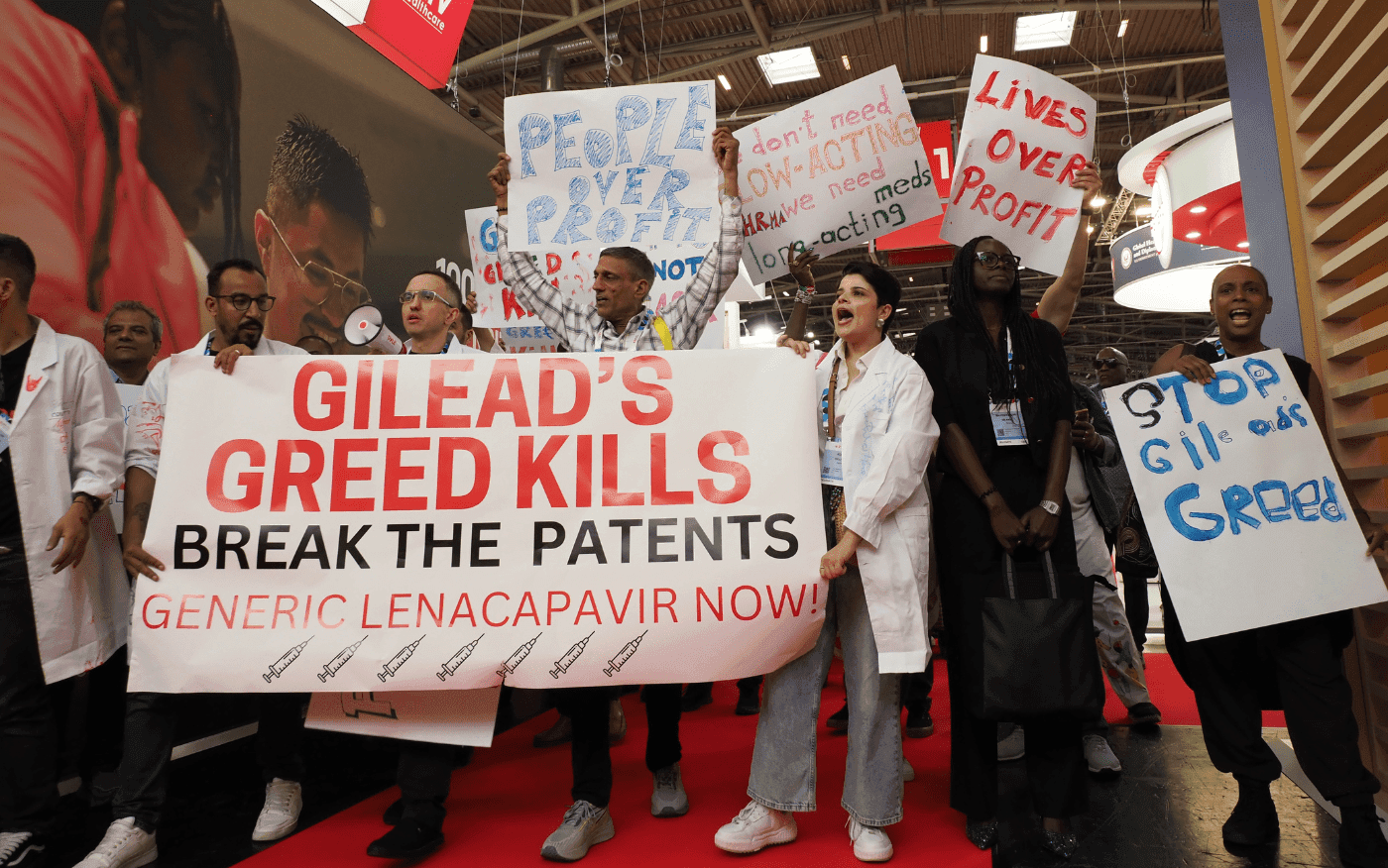
ITPC MENA (Morocco), ATL MST-SIDA (Tunisia), 100% Life (Ukraine) and Salud por Derecho (Spain) filed third-party observations at the European Patent Office (EPO) on 6 November 2026 against Gilead Sciences’ patent application EP 23179840.6, published as EP 4 265 299. It is their second joint filing in six weeks.On 24 September, together with the Moldovan organisation Initiativa Pozitivă, they had already challenged a Merck application on alimatravir.
Gilead’s application covers the combination of lenacapavir with a nucleoside reverse transcriptase inhibitor, and in particular Merck’s islatravir. The two companies are jointly developing a single tablet combining both molecules, to be taken once a week as HIV treatment. In July, they presented 48-week results from the Phase 3 ISLEND-1 and ISLEND-2 trials, in which adults living with HIV who switched from a daily regimen maintained viral suppression, and announced that these data would support their regulatory submissions. If approved, it would be the first once-weekly oral HIV treatment. For people living with HIV, going from a daily pill to one a week could make a real difference, with easier adherence, more discretion and one less daily reminder of their status.
Medical value and patentability are, however, two different questions. A treatment can change patients’ lives without being an invention in the sense of patent law, which rewards what was not obvious, not what is useful. On that point, the organisations argue that the application does not describe an invention. As early as 2014, Gilead had published a patent application on its capsid inhibitors in which it already considered combining them with a nucleoside inhibitor. In February 2016, Merck presented islatravir at the CROI conference in Boston as a molecule suited to long-acting formulations. For a specialist in the field, putting the two together involved nothing inventive. The observations also point out that the application contains no experimental results on the combination itself. It is also the third application Gilead has filed in the same patent family.
“Scientific progress in HIV treatment must translate into real access for people everywhere, not into new barriers created by unjustified patents. The European Patent Office has a responsibility to protect the public interest. Decisions made in Europe have consequences far beyond its borders and must not stand in the way of affordable generic medicines. Innovation must serve public health, not prolong monopolies.”
Vanessa López, Executive Director, Salud por Derecho (Spain)
Morocco directly affected
Gilead requested validation of this application in Morocco and nowhere else. If the EPO grants the patent, it will take effect there without any examination by the Moroccan Industrial and Commercial Property Office (OMPIC), and Moroccan law provides no administrative procedure to oppose it.
For prevention, Morocco will have access to generic lenacapavir at 40 dollars per person per year from 2027, thanks to an agreement backed by Unitaid. For treatment, the picture could be the opposite. No voluntary licence covers the lenacapavir-islatravir combination, and if this patent is granted, it could keep generics out of Morocco until 2037.
“This patent would apply in Morocco without ever being examined here, and once it is granted, the only way to challenge it would be a long and costly court case. Today, the EPO is where we can still defend our public health interest. A once-weekly pill could change the daily lives of people living with HIV, and it should not be locked by a patent on a combination that was already obvious.”
Othmane Marrakchi, Advocacy Lead, ITPC MENA (Morocco)
A coalition that comes back
The Merck application challenged in September designated Georgia, Cambodia, Morocco, Moldova and Tunisia as validation states. In both cases, decisions taken in Munich on new-generation HIV medicines could weigh on access in countries that have no say in them. The organisations intend to continue this work together.
« For people living with HIV in Tunisia, access to treatment is not an abstract debate about patents. It is a question of dignity, quality of life and the right to live without unnecessary barriers. A once-weekly treatment could bring real improvements to people’s daily lives, but innovation has no value if it remains out of reach. People living with HIV must be recognised as rights-holders and active participants in the decisions that affect their lives. Nothing about us without us »
Kods Brahmi, Advocacy Manager, ATL MST SIDA (Tunis)
Contacts:
- Othmane Marrakchi, ITPC MENA (Morocco), othmane.marrakchi@itpcmena.org +212 623 737 536
- Kods Brahmi, ATL MST-SIDA (Tunisia), kodsbrahmi2018@gmail.com +216 27 538 628
- Veronika Kochubei, 100% Life (Ukraine), v.kochubei@network.org.ua +38 093 503 65 60
- Lydia Molina , Salud por Derecho (Spain),lydia.molina@saludporderecho.org +34 680667647
- Sergiy Kondratyuk, ITPC Global, skondratyuk@itpcglobal.org +380673599323