On the sidelines of the Global Fund’s Community Engagement Strategic Initiative partner meeting, ITPC MENA joined a site visit to one of Rwanda’s leading civil society networks, presenting the FORSS programme and its community observatories and exploring avenues for South-South collaboration.
Kigali, Rwanda — 11 November 2026
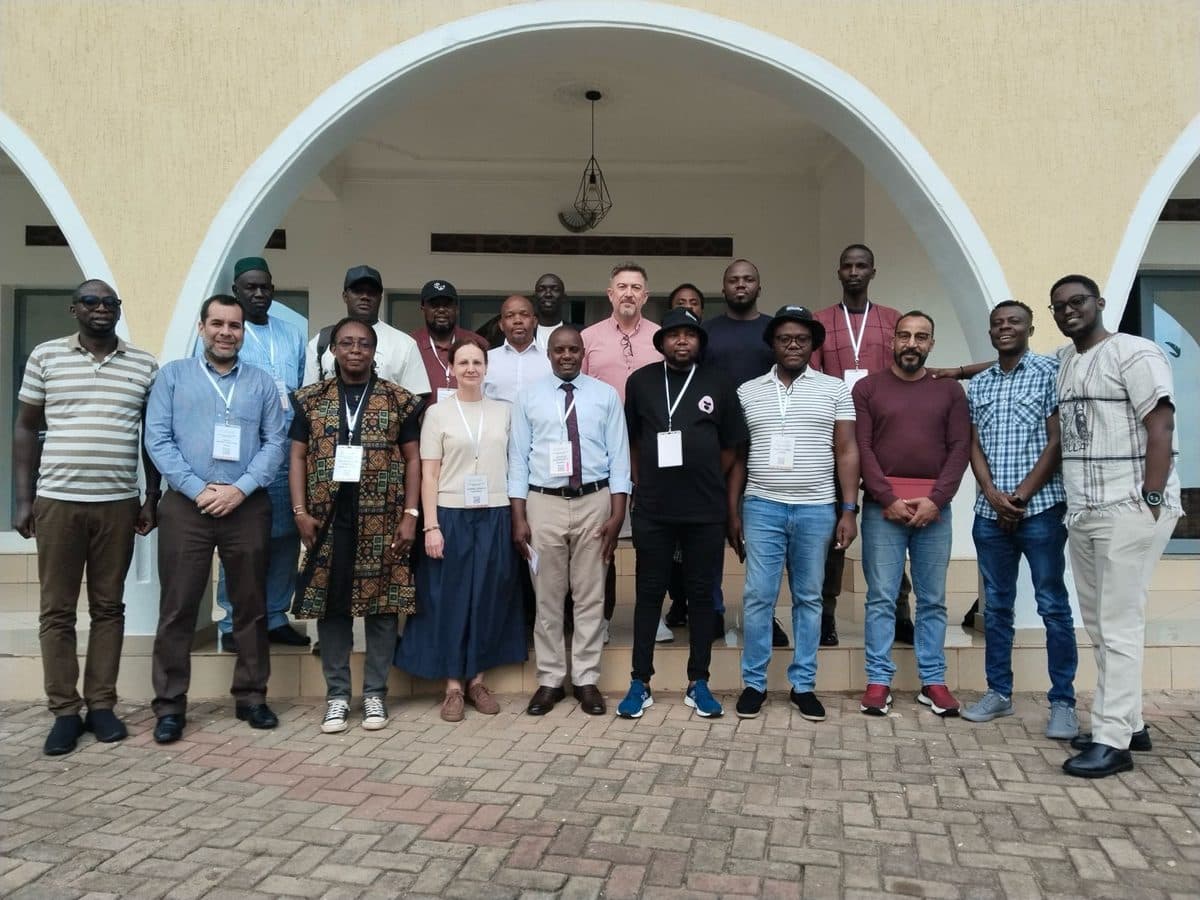
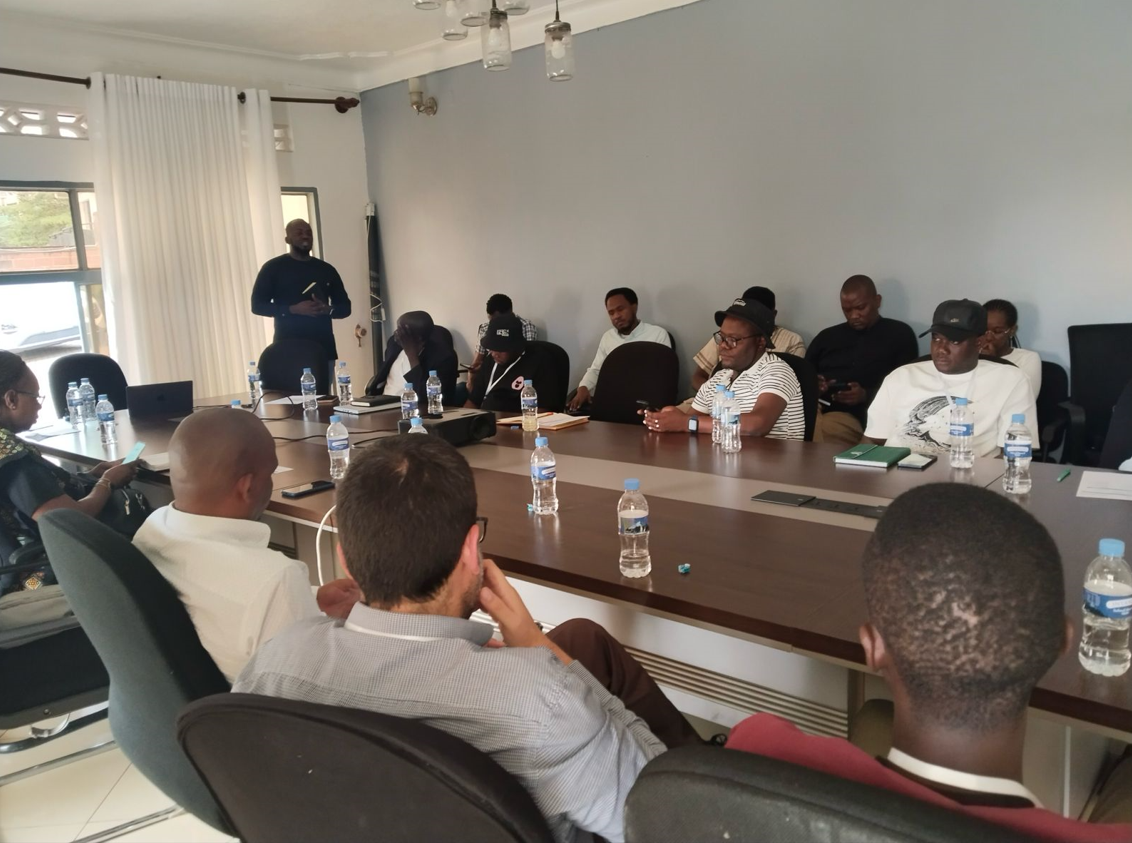
In a modest two-storey building in Kigali, behind a row of white arches, some of the people who make community health responses work around the world sat down at the same table. On Wednesday afternoon, partners of the Global Fund’s Community Engagement Strategic Initiative (CE SI) – gathered in the Rwandan capital for their annual workshop – visited the offices of the Rwanda NGOs Forum on HIV/AIDS and Health Promotion (RNGOF) for an afternoon of exchange on what it takes to put communities at the centre of the fight against HIV, tuberculosis and malaria.
The visit was organised jointly by the Global Fund, RNGOF and the International Community of Women Living with HIV Eastern Africa (ICWEA). Among the participants was the International Treatment Preparedness Coalition for the Middle East and North Africa (ITPC MENA), which used the occasion to share its experience of its FORSS programme and its network of community observatories in the region.
A national network built from the ground up
Founded in 1999, RNGOF is an umbrella network of national non-governmental organisations working on HIV and broader health promotion in Rwanda. Today it brings together around 139 member organisations and is decentralised down to the district level. Its work spans coordination, capacity building, advocacy, resource mobilisation and the monitoring and evaluation of its members’ activities, in close collaboration with the Rwanda Biomedical Centre. The Forum also implements Global Fund-supported community programmes on HIV, TB and malaria.
Moderated by Dr. Tunga of RNGOF, the session opened with an overview of the Forum’s history and mandate by its Executive Director, followed by remarks from the Team Leader of ICWEA on behalf of the visiting delegation. Louis, of RNGOF, then gave a detailed presentation on the Forum’s work on HIV, TB and malaria, showing how a national civil society network can coordinate community action at scale while keeping a direct line to national health authorities.
The longest part of the afternoon was given over to an open question-and-answer session, in which partners from different regions compared notes on governance, financing, data and the place of communities in national decision-making.
Bringing the MENA experience to the table
For ITPC MENA, the visit was an opportunity to share a model built over several years in a very different context. Through the FORSS programme, led jointly with the French NGO Solidarité Sida and supported by L’Initiative, ITPC MENA and its national partners have run community HIV observatories in the Middle East and North Africa since 2018. These are community-led monitoring (CLM) mechanisms in which people living with HIV and key populations themselves document the barriers they face in accessing testing, treatment and care.
The current phase of the programme, FORSS2, works with implementing partners in countries including Morocco, Tunisia, Mauritania and Lebanon. More than 11,000 questionnaires have been collected and analysed across seven dimensions of access to care. The resulting evidence has already led to concrete change: a ministerial circular in Tunisia ending the mandatory recording of HIV status in medical files; new testing rooms, free testing at some sites and an expanded prevention package in Mauritania; a list of allied psychotherapists set up in Lebanon with the national AIDS programme; and, in Morocco, the observatory model is cited in the national AIDS programme’s recommendations, with an invitation from the Ministry of Health to extend it to the Souss-Massa region.
Presenting this experience in Kigali, ITPC MENA highlighted both what the region has in common with East Africa and what sets it apart: low HIV prevalence but concentrated epidemics, strong stigma, legal barriers affecting key populations, and a shrinking space for international funding. Those conditions make community-generated data especially valuable.
What we saw today in Kigali is what a mature community response looks like: a national network that is organised, decentralised and taken seriously by its health authorities. In the MENA region, our community observatories have shown that when people living with HIV and key populations collect their own data, they can change policies, not just describe problems. Exchanges like this one are how we learn from each other, and we came away with concrete ideas for working with the Rwanda NGOs Forum on community-led monitoring, peer learning and joint advocacy. – Zakaria Bahtout, Programmes Manager at ITPC MENA and FORSS Project Lead
Towards South-South collaboration
Beyond the presentations, the meeting allowed ITPC MENA and RNGOF to explore possible areas of future collaboration. These included exchanging tools and methods for community-led monitoring, sharing experience on how community data can feed into Global Fund and national processes, and building peer-learning links between civil society networks in East Africa and the MENA region.
This kind of exchange is at the heart of the Community Engagement Strategic Initiative. The initiative aims to strengthen the engagement and leadership of communities most affected by HIV, TB and malaria in Global Fund and related national processes, and marked its tenth year of implementation in 2025. By bringing its partners into the field, the Kigali workshop turned a technical meeting into a practical learning exercise.
The afternoon ended with closing remarks from RNGOF’s Executive Director and ICWEA’s Team Leader, and a group photograph under the arches of the Forum’s offices. For ITPC MENA, the visit confirmed a conviction that runs through all its work: community responses are strongest when communities learn from one another, across borders and across regions.
About the Rwanda NGOs Forum on HIV/AIDS and Health Promotion (RNGOF Created in 1999, RNGOF is a national network of non-governmental organisations that promotes, coordinates, monitors and evaluates civil society action against HIV/AIDS, TB, malaria and other health priorities in Rwanda.