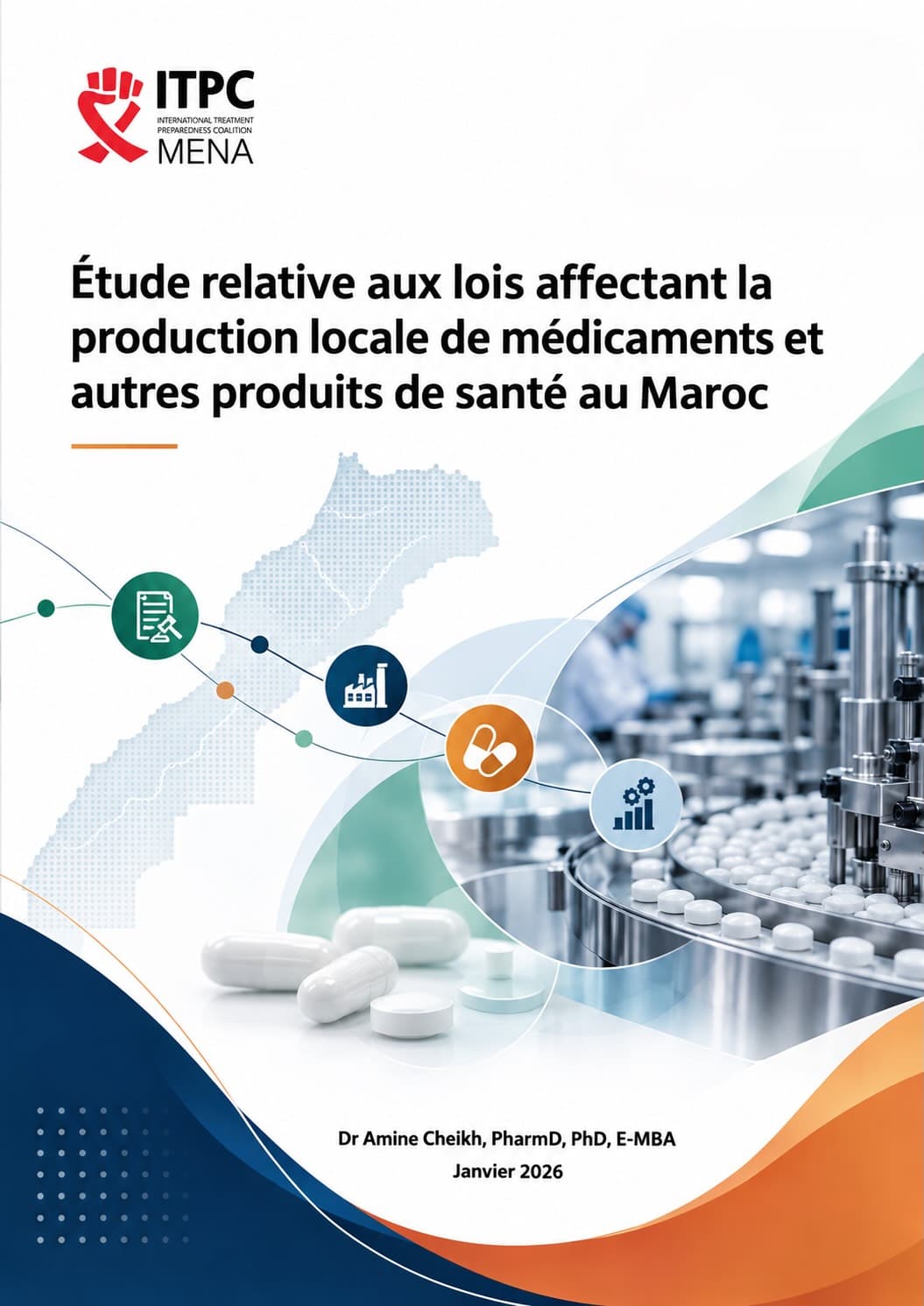
Study : Study on Laws Affecting the Local Production of Medicines and Other Health Products in Morocco
Intellectual property and access to medicines

Study on Laws Affecting the Local Production of Medicines and Other Health Products in Morocco

Type
Study
Published
2026
Countries
Morocco
Language
Français

This study examines the legal, regulatory and economic factors affecting local pharmaceutical production in Morocco, including marketing authorisations, pricing, taxation, intellectual property and investment. Despite a relatively comprehensive regulatory framework and an established pharmaceutical industry, significant barriers remain, limiting the growth of local production and its export potential.

Available versions

  • Étude relative aux lois affectant la production locale de médicaments et autres produits de santé au MarocFrançaisPDF · 3.8 MB

On the same topic

Intellectual property and access to medicines

Assessment of the Legal Framework on Intellectual Property and Its Impact on Access to Medicines (Egypt, Morocco, Tunisia)

Study2023· Morocco, Egypt, Tunisia

This study examines the legal provisions that may facilitate or restrict access to medicines in Egypt, Morocco and Tunisia. It focuses on patentability, the duration of monopolies, compulsory licensing, parallel imports, data exclusivity, and the links between patents and marketing authorisations. Each provision is qualitatively assessed and scored to identify the available legal flexibilities for improving access to medicines.

Intellectual property and access to medicines

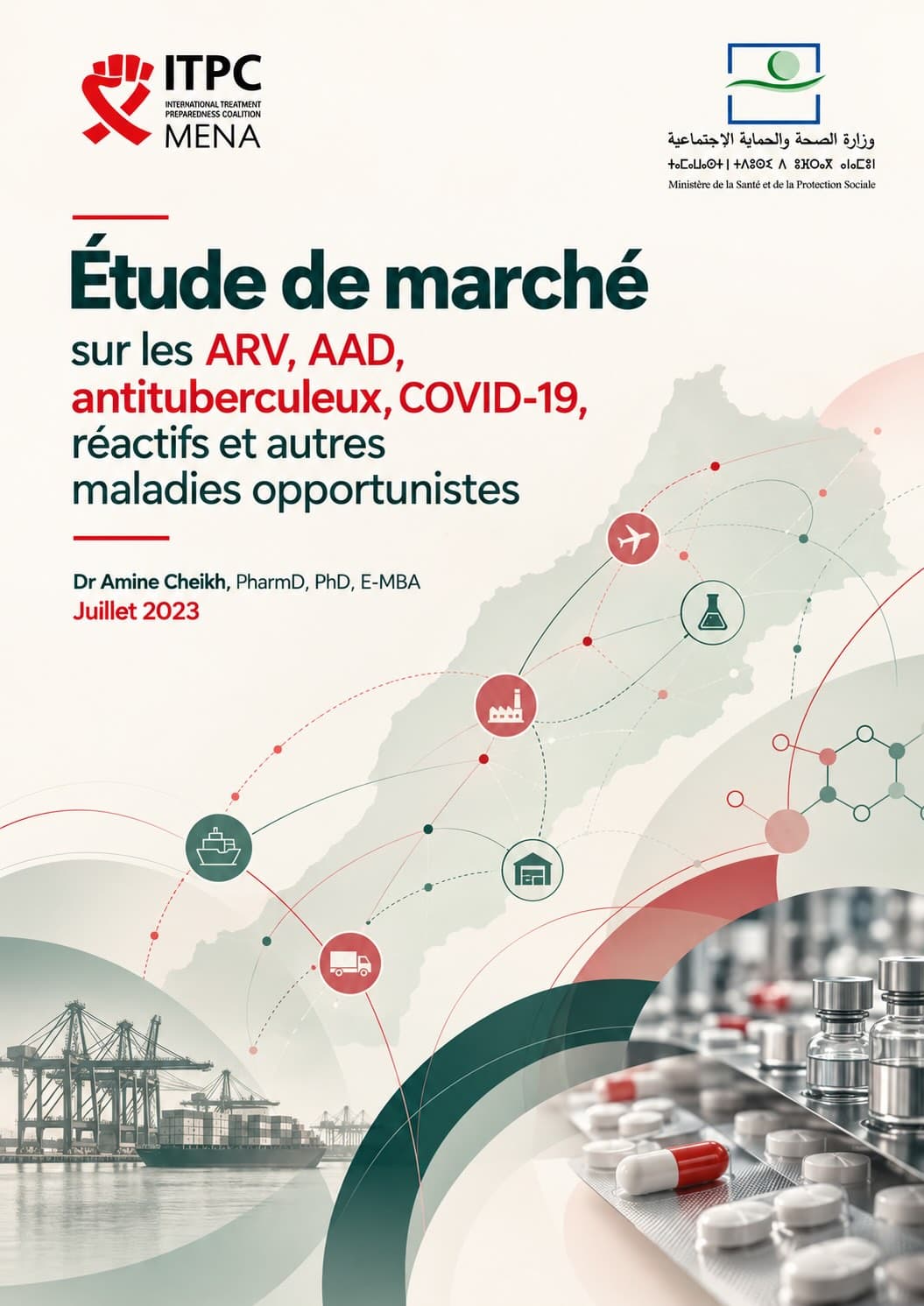
Market Study on Antiretrovirals (ARVs), Direct-Acting Antivirals (DAAs), Anti-Tuberculosis Drugs, COVID-19 Treatments, Diagnostic Reagents, and Other Opportunistic Diseases

Study2023· Morocco

In collaboration with the Ministry of Health and Social Protection, this study examines the availability, marketing, manufacturing and importation of medicines and diagnostic reagents used in Morocco to address HIV, tuberculosis, hepatitis C, COVID-19 and opportunistic infections. It highlights reliance on imports across several therapeutic categories, particularly antiretroviral medicines.